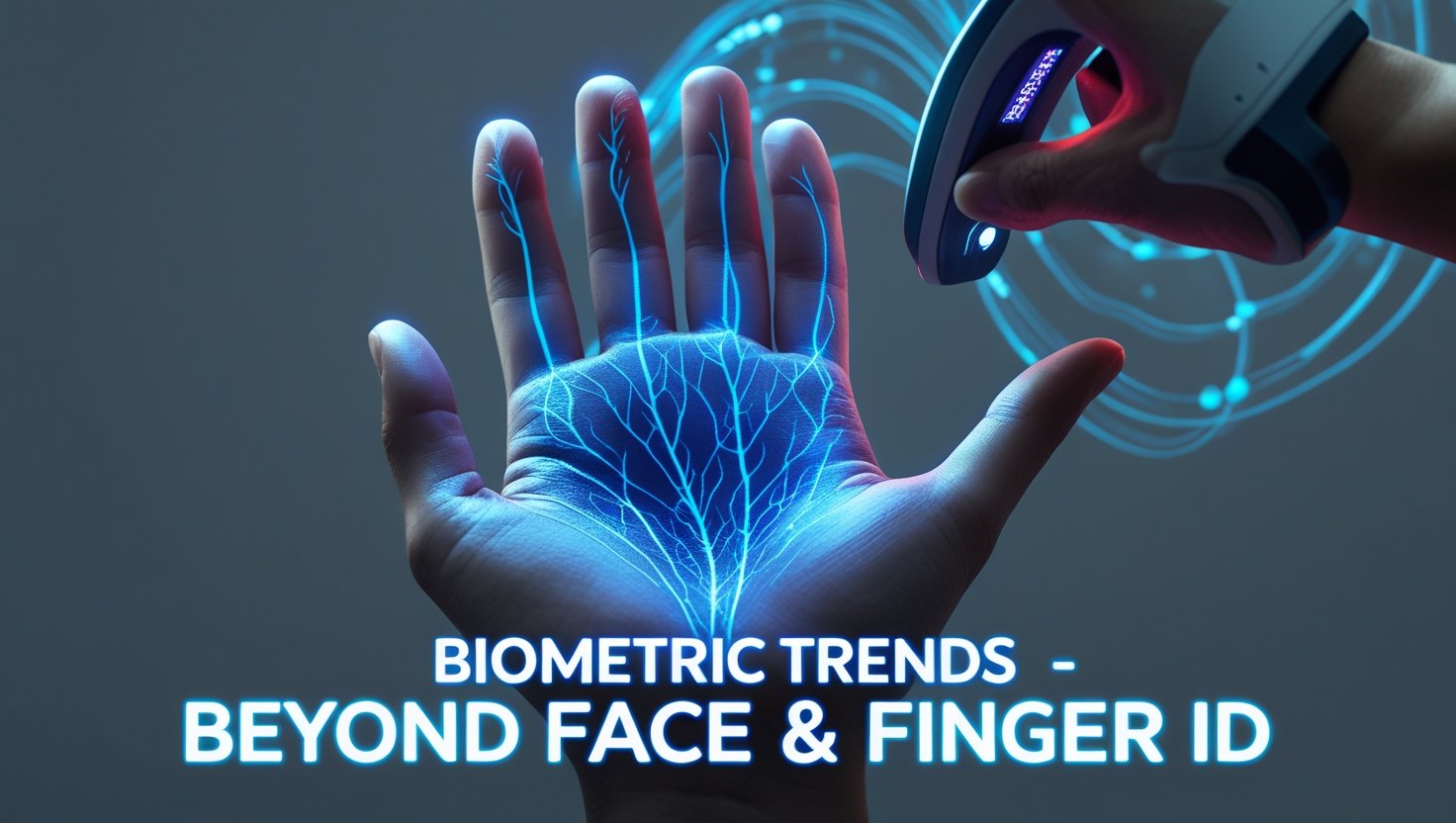
Imagine a world where your identity is verified not just by a glance or a touch but by subtle cues like your voice, gait, or even the way you interact with technology. Biometric trends are evolving rapidly beyond traditional face and finger ID, redefining security and personalization for the digital age. This article delves into how advanced biometrics are opening new frontiers in authentication while addressing privacy challenges and powering everyday innovations.
The Evolution of Biometric Technology:
Over the past two decades, biometric authentication has transitioned from a niche security tool to a fundamental component of identity verification. Initially, systems focused on fingerprints and facial recognition because these markers were considered unique and relatively easy to capture. Today, however, the biometrics landscape is undergoing a critical transformation.
Early biometric systems often relied on static data—fixed images or imprint patterns. As digital technologies advanced, so did the understanding that human identity is multidimensional. Researchers and developers now harness dynamic features such as voice inflections, iris patterns, and even behavioral cues. These emerging modalities are supported by sophisticated sensors and robust algorithms that can operate in real time, providing a higher level of security and reducing the risks of spoofing or data breaches. The revolution in biometric trends underscores a significant leap toward more expansive and reliable identity verification systems.
Unveiling New Identifiers:
The next generation of biometric technology is about harnessing a broader spectrum of human characteristics. One of the most promising areas is voice recognition. Beyond capturing just the sound of your speech, modern systems analyze tone, pitch, cadence, and even emotional undertones, making it increasingly difficult for imposters to mimic. Similarly, iris scanning provides an ultra-detailed mapping of the unique patterns within your eyes, patterns that remain stable over a lifetime, offering a high degree of reliability.
Yet another burgeoning field is behavioral biometrics, which observes how you interact with devices. This approach monitors keyboard dynamics, mouse movements, and even touchscreen gestures. By analyzing these patterns, systems can establish a digital behavioral fingerprint that complements other biometric modalities. These advanced identifiers not only boost security but also enhance user convenience by providing seamless authentication in environments where traditional methods fall short.
Integrating Multi-Factor Biometric Systems:
A key trend in advanced authentication is the integration of multiple biometric modalities into a single system—often referred to as multi-factor biometric systems.
By combining, say, voice, face, and behavioral analysis, organizations can create robust and layered security solutions that are far more resistant to fraudulent attempts. This comprehensive approach leverages the strengths of each modality, ensuring that if one form of verification is compromised, others remain intact. Multi-factor systems provide flexibility across different contexts: from high-security areas like government facilities to more consumer-oriented applications such as banking apps or smart home systems.
The primary benefit is a significant reduction in false positives and negatives, which means users enjoy a smoother experience while administrators benefit from enhanced security. In effect, multi-layered biometrics act as a digital fortress, continuously adapting to new threats and improving with each authentication attempt.
Wearable & Contactless Solutions: Seamless Security:
Modern lifestyles demand security that is not only robust but also non-intrusive. Wearable technologies and contactless devices are emerging at the forefront of this shift.
Smartwatches, fitness bands, and even clothing embedded with sensors are now capable of monitoring vital signs and integrating with biometric systems to verify identity. For example, a smartwatch might continuously analyze your heart rate variability and movements, using these metrics as additional authentication factors when you access secure areas or devices.
In parallel, contactless biometric systems are gaining traction. These systems employ infrared sensors, radar, and even thermal imaging to verify identity from a distance. This approach proves especially valuable in public spaces, airports, and hospitals where hygiene and social distancing are critical concerns. By eliminating the need for physical contact, these innovations not only increase comfort and convenience but also contribute to public health by reducing the spread of germs.
AI and Advanced Algorithms Revolutionizing Biometrics:
At the heart of today’s biometric revolution is the integration of artificial intelligence (AI) and advanced analytical algorithms.
AI-powered biometric systems analyze vast amounts of data in real time, learning and adapting from each authentication event. Machine learning models improve continuously as they are exposed to new patterns of human behavior, which makes them exceptionally adept at distinguishing between genuine users and potential imposters. These algorithms can detect subtle anomalies or deviations that human analysts might overlook, thereby reinforcing the overall security system.
Moreover, AI enables predictive analysis. For instance, by studying user behavior over time, AI can predict when an account might be compromised or when an unauthorized access attempt is likely to occur. This proactive stance, powered by real-time data processing and AI, ensures that security systems are not just reactive but are constantly evolving to meet new and unforeseen challenges in the realm of biometric trends.
Privacy, Trust, and Ethical Imperatives:
While the benefits of advanced biometrics are considerable, they also bring significant privacy and ethical concerns.
With the proliferation of biometric data, the potential for misuse or unauthorized surveillance has raised alarms among privacy advocates. Strict data protection laws and regulations, such as GDPR, now mandate that organizations handle biometric information with the utmost care. This includes obtaining explicit consent, ensuring robust data encryption, and providing users with control over their information.
Trust is essential for the mass adoption of advanced biometrics. Companies must be transparent about how the data is used and assure users that their privacy remains a priority. Ethical frameworks are being developed to guide the responsible implementation of biometric technologies, balancing innovation with individual rights. By prioritizing ethical considerations and privacy safeguards, the industry aims to foster an environment where technological advancement and personal freedom can coexist.
Real-World Applications:
The impact of biometric trends extends far beyond high-security access points. Advanced biometric systems are infiltrating everyday life in ways that enhance convenience and efficiency.
In the financial sector, biometrics are transforming how we secure transactions. Imagine authorizing a payment or signing into your bank account through voice recognition or behavioral authentication—methods that ensure a frictionless yet secure experience. Retailers and service providers are increasingly adopting these measures for customer identification and fraud prevention.
Similarly, smart cities are employing biometric solutions for public safety and urban management. Surveillance systems enhanced with advanced facial and iris recognition can quickly identify persons of interest in crowded areas, enabling law enforcement to act swiftly. Meanwhile, healthcare providers use biometrics to maintain secure and accurate patient records, reducing errors and streamlining care processes.
From unlocking devices to personalized customer interactions, biometrics are steadily reshaping the way we interact with technology daily, offering enhanced security without compromising convenience.
Future Horizons: Emerging Possibilities in Biometrics:
Looking ahead, the field of biometric technology is poised for continuous innovation. New research is exploring less conventional identifiers, such as gait analysis, brainwave monitoring (electroencephalography), and even chemical signatures, to further expand the scope of identification.
Emerging trends include the development of decentralized biometric systems, where blockchain technology ensures data integrity and prevents unauthorized access. This merging of biometrics with blockchain could provide an unprecedented level of transparency and security, fundamentally transforming identity management in sectors ranging from finance to healthcare.
Furthermore, the integration of augmented reality (AR) and mixed reality (MR) with biometric systems promises to revolutionize user experiences. Imagine wearing AR glasses that seamlessly authenticate you as you move through secure environments, or MR-assisted surgeries that confirm a patient’s identity in real time for safer, more efficient care. The possibilities are boundless, and each innovation reaffirms that the future lies in versatile, adaptive biometric solutions that go far beyond face and finger ID.
Conclusion:
Biometric trends are ushering in an era where identity verification is more secure, seamless, and innovative than ever before. By moving beyond traditional face and finger ID, advanced biometrics promise a future where every interaction is empowered by intelligence and efficiency.
FAQs:
- What are the latest biometric trends?
They include voice, iris, behavioral biometrics, and multi-factor authentication systems.
How do new biometric methods improve security? They enhance accuracy by combining multiple data points and leveraging AI-powered analytics.
Are wearable biometrics reliable? Yes—modern wearables offer continuous authentication with advanced sensors and real-time processing.
What ethical concerns exist around biometrics? Issues like data privacy, unauthorized tracking, and consent are key challenges.
How are AI and machine learning used in biometrics? They refine recognition models, detect anomalies, and predict potential security threats.
What does the future hold for biometric technology? Expect decentralized systems, blockchain integration, and new modalities like gait and brainwave analysis.
